By Panneerselvam Peramaiyan, Amit Srivastava, and Virender Kumar
International Rice Research Institute (IRRI)
India stands at the center of the global rice economy. The country cultivates more rice area than any other nation and contributes significantly to global food security. Yet despite this scale, Indian rice systems continue to operate well below their productivity potential. Yield gaps remain substantial, nitrogen-use efficiency is declining, and fertilizer subsidy systems continue to incentivize excessive and imbalanced nutrient application. Against this backdrop, the International Rice Research Institute (IRRI), with support from the World Bank and the Korea Green Growth Trust Fund, developed a multi-source, multi-strata data platform to build a robust proof of concept on the future of rice production through improved nitrogen management.
Developed through pilot studies in Maharashtra and Odisha, the study combines data from the ground to the sky — field trials, digital soil intelligence, ground sensors, drone imagery, and remote sensing — to examine how targeted nitrogen management can improve productivity, profitability, and environmental sustainability in rice systems. The findings suggest that India’s next agricultural transformation may not come from applying more fertilizer, but from applying fertilizer more intelligently.
“India’s next agricultural transformation may not come from applying more fertilizer, but from applying fertilizer more intelligently.”
India’s nitrogen challenge
Nitrogen fertilizer remains central to rice production, but its use in India has become increasingly inefficient. India’s nitrogen-use efficiency (NUE) has declined from nearly 50% to about 42% over the past two decades. The country’s fertilizer consumption pattern has also shifted sharply toward nitrogen-heavy use, with the national N:P:K ratio widening to nearly 10:4:1 — far from the desirable ratio of 4:2:1.
This imbalance is closely linked to India’s fertilizer subsidy architecture, where urea receives disproportionately high support compared to phosphatic and potassic fertilizers. As a result, farmers often rely on blanket, calendar-based urea applications regardless of field-level soil variability, crop nutrient demand, or environmental conditions. This approach is economically costly, environmentally inefficient, and agronomically unsustainable. Excess nitrogen not only lowers fertilizer efficiency but also contributes to groundwater contamination, greenhouse gas emissions, and soil degradation.
| KEY FACTS AT A GLANCE: |
|---|
| India’s NUE has declined from ~50% to ~42% over two decades. |
| National N:P:K ratio has widened to ~10:4:1 vs the desirable 4:2:1. |
| 142 geo-referenced soil samples collected across pilot districts in Maharashtra and Odisha. |
| UDP places urea briquettes 7–10 cm below surface — reducing volatilisation, runoff, and leaching. |
| P and K application reduced by 25% based on soil-test data in precision treatment arms. |
| Satellite advisory layers can operate at near-zero marginal cost once calibration is established. |
Building a digital precision agriculture framework
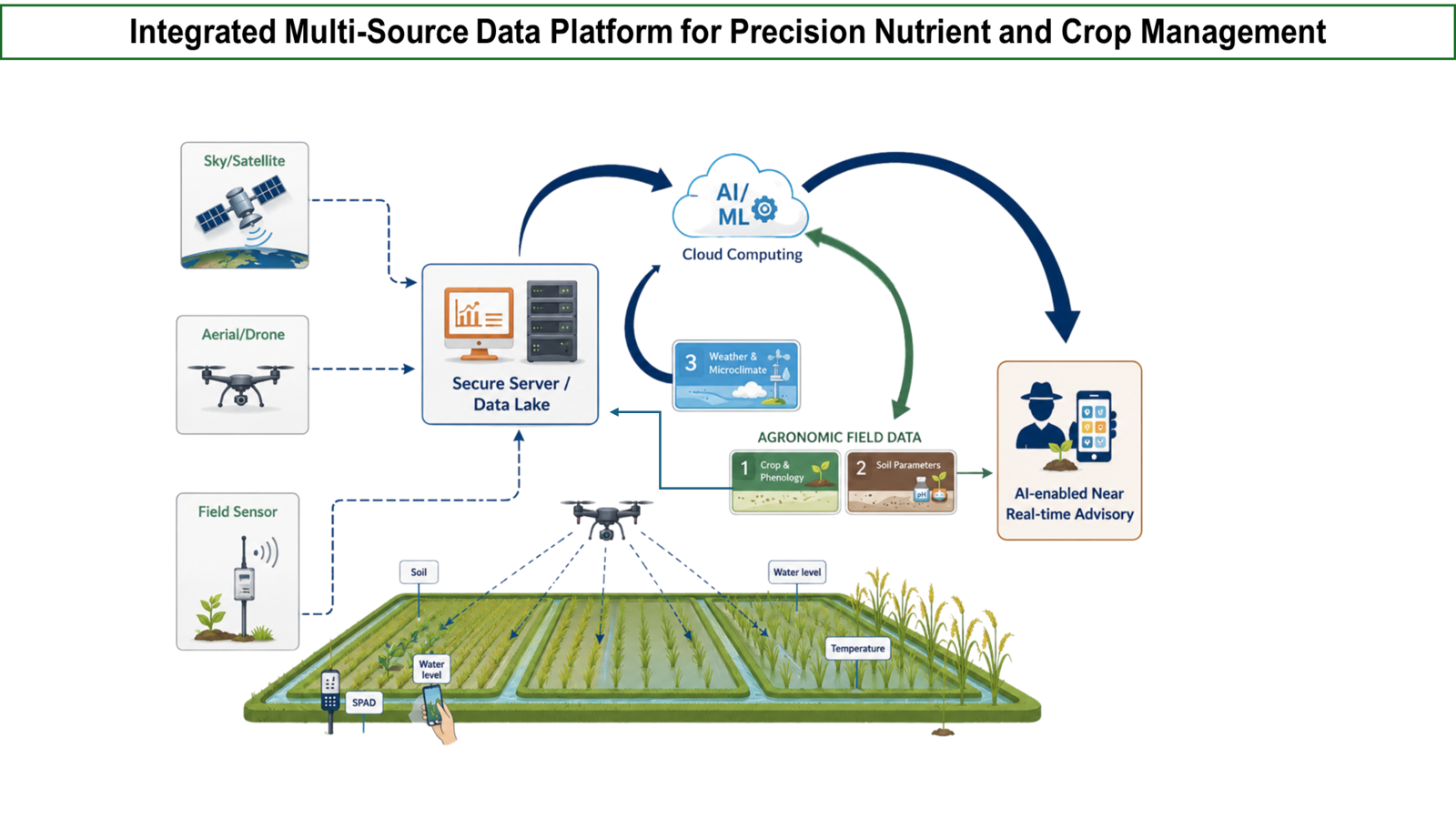
The study tested an integrated precision nutrient management framework anchored around three core pillars: Digital Soil Mapping (DSM), precision nitrogen application technologies, and sensor-enabled monitoring systems using GreenSeeker/SPAD meters, drones, and satellite imagery.
Study sites were selected across contrasting agro-ecological conditions and soil types — Vertisol in Nagpur district of Maharashtra and Alfisol in Puri district of Odisha — to test the robustness of the framework under varying rainfall patterns, soil types, and crop environments. A total of 142 geo-referenced soil samples were collected in two soil depth (0-15 cm and 16-30 cm) using stratified sampling methods and integrated with satellite imagery, terrain data, climate layers, and global soil databases to generate high-resolution Digital Soil Maps for available nitrogen, P, K, soil organic carbon, pH, and micronutrients.
These digital soil map outputs enabled field-level nutrient characterisation, replacing generalised fertilizer recommendations with site-specific nutrient intelligence — demonstrating how digital agriculture can bridge one of India’s major extension gaps: translating soil information into actionable, timely fertilizer recommendations for farmers.
Testing precision nitrogen management in farmers’ fields
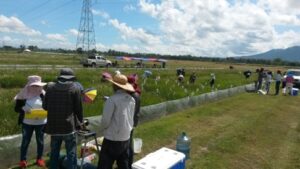
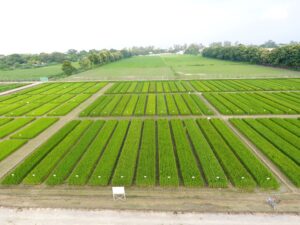
The pilot compared three nutrient management strategies across 40 farmers’ fields: (T1) conventional farmer practice; (T2) soil test-based recommendation (STBR); and (T3) urea deep placement (UDP) — using the same dose as T2 but with the basal application placed directly in the root zone. Each treatment covered more than 2,000 m² in farmers’ fields.
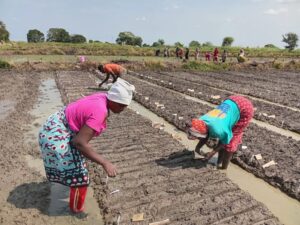
UDP involves placing compact urea briquettes 7–10 cm below the soil surface, directly within the root zone, reducing nitrogen losses from volatilisation, runoff, and leaching. In both T2 and T3, phosphorus and potassium rates were reduced by 25% based on soil-test data, while nitrogen application was reduced by an average of 6 kg ha⁻¹ in Maharashtra and 11 kg ha⁻¹ in Odisha compared to conventional practice.
The results were striking. Precision nutrient management with reduced NPK inputs consistently outperformed conventional fertilizer practice across all sites. UDP achieved yield gains of 14–24% in Odisha and 16–26% in Maharashtra. Partial Factor Productivity of Nitrogen (PFP-N) improved by approximately 34% in Maharashtra and 30% in Odisha under UDP. Compared to conventional practice, the integrated DSM and UDP framework increased farmer income by approximately USD 165–190 per hectare per season.
One of the most important findings was the interaction between soil moisture and nitrogen placement. Farms experiencing surface moisture stress still achieved significant yield gains under UDP because fertilizer was placed within deeper moist soil layers where roots remained active, a finding particularly relevant for climate-vulnerable rice systems facing increasing rainfall variability and intermittent dry spells.
Digital monitoring and near real-time advisories
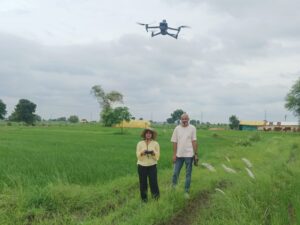
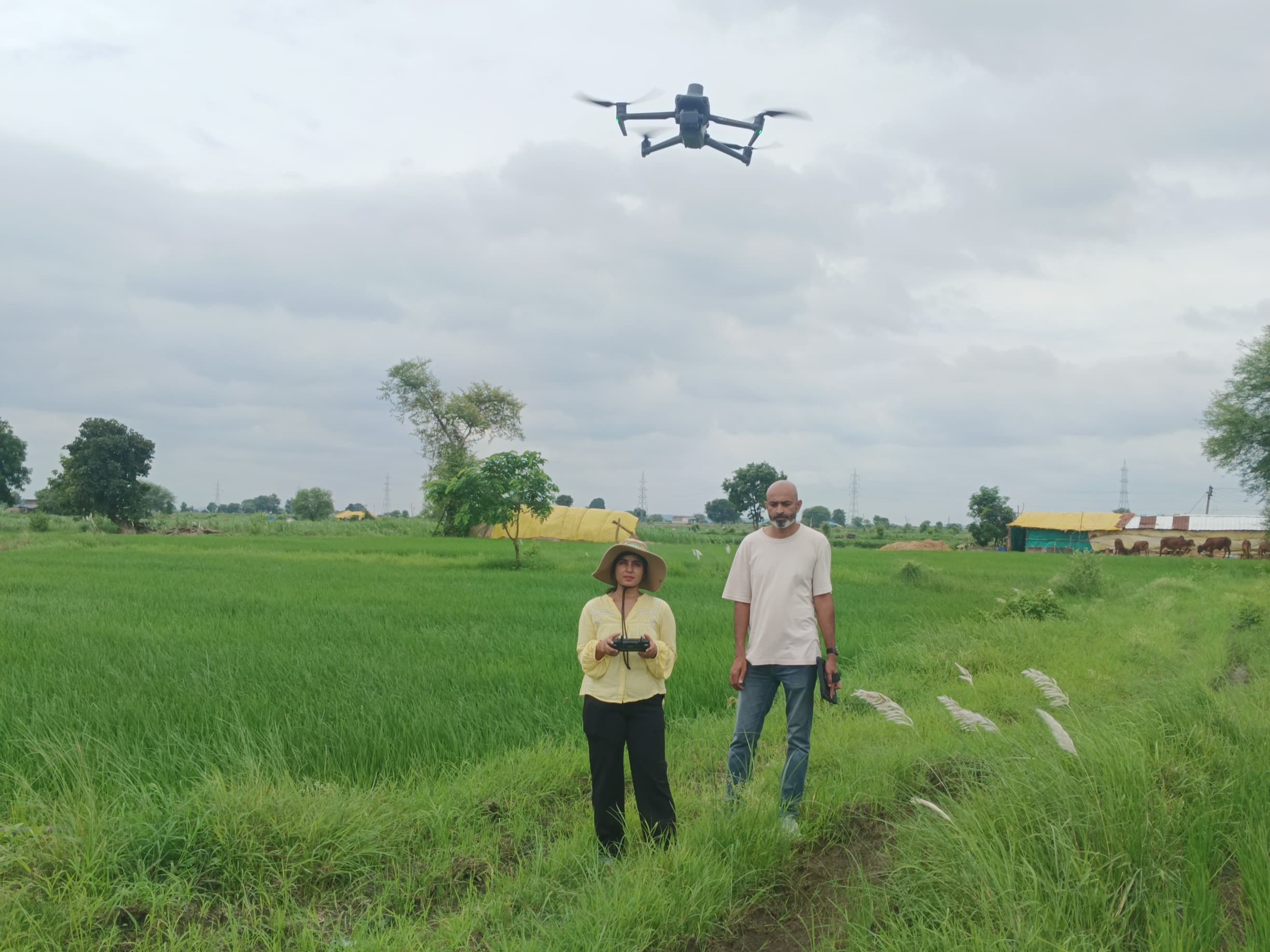
The study demonstrates how remote sensing and digital technologies can support scalable advisory systems for smallholder farmers, particularly for nitrogen management. The team integrated data from handheld sensors, IoT soil moisture monitors, drone-based multispectral imaging, and Sentinel-2 optical satellite imagery into a unified data system for precision nitrogen management.
A multi-tier monitoring framework linked ground observations with drone imagery and satellite-scale analysis. Satellite imagery was processed every five days to assess crop nitrogen status using vegetation indices such as NDVI and NDRE, calibrated against field-based SPAD chlorophyll readings to generate near real-time fertilizer advisories delivered via SMS and WhatsApp.
| THE FIVE-STEP ADVISORY PIPELINE |
|---|
| 1 SENSE – Satellite imagery (Sentinel-2), drone multispectral, SPAD meters, IoT soil moisture sensors |
| 2 ANALYSE – Vegetation indices (NDVI, NDRE) calibrated against field SPAD readings |
| 3 DECIDE – Site-specific nitrogen recommendations based on crop status and growth stage |
| 4 DELIVER – SMS and WhatsApp advisory to farmers in near real-time |
| 5 FORECAST – Predictive analytics to guide next-season nutrient planning |
Importantly, once calibration systems are established, satellite-based advisory layers can operate at near-zero marginal cost at scale, making the framework economically attractive for large-scale deployment and supporting a policy shift from subsidising fertilizer volume toward incentivising nutrient-use efficiency and evidence-based nutrient management.
Satellite-based sensing can enable near real-time nitrogen recommendations for millions of farmers — at minimal additional cost.
Looking ahead
The pilot evidence from Maharashtra and Odisha points to a compelling and scalable model for transforming nitrogen management in Indian rice systems. The combination of digital soil mapping, urea deep placement, and satellite-based crop monitoring demonstrates that it is technically feasible — and economically attractive — to simultaneously reduce fertilizer inputs, increase farm income, and improve environmental sustainability.
Scaling this framework will require investment in calibration infrastructure, capacity building among extension systems, and policy reforms that shift subsidy incentives from fertilizer volume toward evidence-based, nutrient-efficient management. But the foundation is clear: the future of Indian rice farming lies not in more nitrogen, but in smarter nitrogen.
Drs. Panneerselvam Peramaiyan and Amit Srivastava are scientists based at IRRI South Asia Regional Centre, Varanasi, India. Dr. Virender Kumar is the SIRS Research Director at IRRI HQ in the Philippines. This work was supported by the World Bank and Korea Green Growth Trust Fund.
Contact: p.panneerselvam@cgiar.org